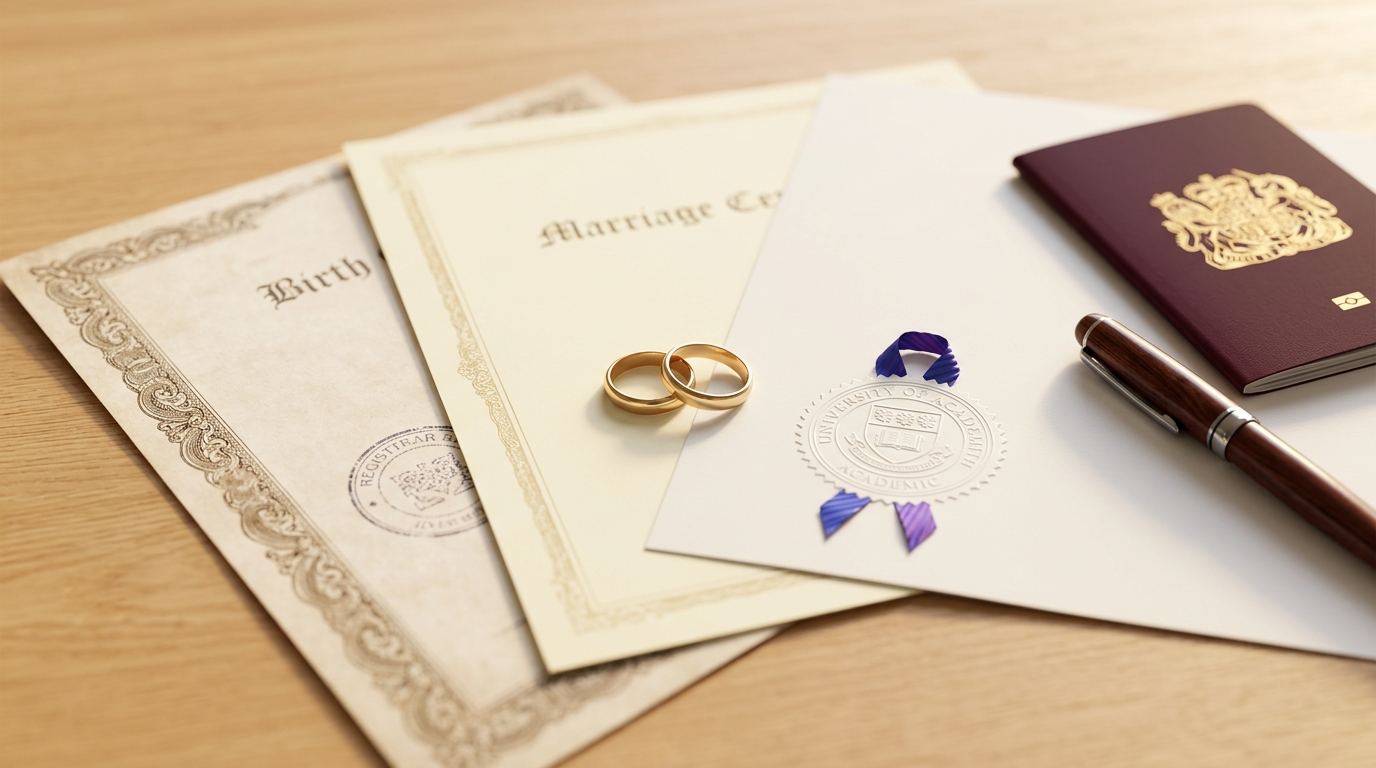
Certified Translation vs Apostille: What's the Difference?
If you are preparing documents for a visa, a marriage abroad, a foreign university or an overseas employer, you have probably come across two terms that are often confused: certified translation and apostille. They are not the same thing, they serve different purposes — and in some cases you need both. This guide explains the difference in plain English.
What Is a Certified Translation?
A certified translation is a complete and accurate translation of a document, accompanied by a signed statement from a qualified translator confirming that the translation is a true reflection of the original. It typically includes:
- The full translation, including stamps, seals and handwritten notes
- The translator's certification statement and signature
- The translator's full name, contact details and the date
Its purpose: to make a document written in another language understandable and reliable for the authority receiving it. Learn more about our certified translation service in the UK.
What Is an Apostille?
An apostille is an official certificate that confirms a signature, seal or stamp on a public document is genuine. It was created by the 1961 Hague Apostille Convention so that public documents issued in one member country can be recognised in another without further legalisation.
In the UK, apostilles are issued by the FCDO Legalisation Office (Foreign, Commonwealth & Development Office).
Important: an apostille does not translate anything and does not confirm that the content of the document is correct. It only confirms that the signature or seal on it is authentic.
The Key Differences at a Glance
- What it does: a certified translation converts a document into another language; an apostille authenticates a signature or seal.
- Who provides it: a certified translation is produced by a qualified translator or agency; an apostille is issued by a government authority (the FCDO in the UK).
- When it is used: a certified translation is needed when a document is not in the language of the receiving authority; an apostille is needed when a document must be officially recognised in another country.
When Do You Need a Certified Translation?
For most uses inside the UK, a certified translation is all you need. This includes:
- Visa and immigration applications to UKVI and the Home Office
- University applications and UK ENIC
- GMC, NMC and other professional registrations
- Most employers, banks and local councils
The Home Office does not generally ask for an apostille on translations — it requires a properly certified translation. See our UKVI translation requirements guide for details.
When Do You Need an Apostille?
An apostille is usually required when a UK document is going to be used abroad, for example:
- Getting married in another country with a UK birth certificate
- Using a UK degree certificate to work or study overseas
- Registering a company or buying property abroad
- Legal proceedings in a foreign court
When Do You Need Both?
Some foreign authorities require a document to be translated and apostilled. In the UK, only documents signed by a UK public official, solicitor or notary can be apostilled. This means the usual process is:
- 1. A qualified translator produces the certified translation
- 2. The translation is certified by a solicitor or notary public
- 3. The FCDO Legalisation Office adds the apostille
Each foreign authority has its own rules, so always confirm exactly what they need before you start — it can save you time and money.
Common Misconceptions
- "An apostille replaces a translation." False — if the document is not in the required language, you still need a translation.
- "Every certified translation needs an apostille." False — for UK authorities, a certified translation is normally enough.
- "An apostille proves my document is accurate." False — it only authenticates the signature or seal.
Need Help With Your Documents?
FastCert Translations provides certified translations accepted by the Home Office, UKVI, UK universities, the GMC, NMC and courts — delivered in 24–48 hours from £28 per page. If your document also needs notarisation or an apostille for use abroad, tell us when you request your quote and we will advise you on the right process.
Request your free quote or contact our team with your questions.